Monday, November 17, 2014
Board meeting
We will hold a board meeting this Thursday, November 20 at 6:30 pm. We will meet in room 227 of the Berry Center. Our board meetings are open to the public; if you are interested in the behind-the-scenes of the Laramie Audubon Society, feel free to join us.


Friday, November 14, 2014
Upcoming talk by Tim Banks
The last speaker for this fall is our very own Tim Banks. Please join us for his talk entitled
"Sandhill Crane Natural History and Behavior (and More!)" next Wednesday, 19 November at the Berry Center
auditorium. We will also hold board member elections during this meeting; if you are a member of the Laramie Audubon Society you can vote to confirm or oppose election or re-election of board members. If you can't attend the talk, you can vote online here.
Schedule of events
6:30 pm - Mingling and refreshments
7:00 pm - Election of board members
7:15 pm - Sandhill Crane program
Below, Tim gives us a sneak peek of his talk.
~~~
Cranes are the stuff of magic, whose voices penetrate the atmosphere of the world's wilderness areas, from arctic tundra to the South African veld, and whose footprints have been left on the wetlands of the world for the past 60 million years or more. - Paul Johnsgard
Standing up to 46 inches tall and with a wingspan of six feet, a sandhill crane is an impressive bird. Put together 500,000 of them during the peak of spring migration in central Nebraska, and you have one of the most awe-inspiring wildlife spectacles in North America. That alone may make a road trip to view these magnificent birds well worth the effort, but there is much, much more to their story.
For one thing, these birds have charisma! They dance, they bicker, they fight--sandhill cranes, like all cranes, are social and their interactions suggest that there is a lot more drama within the flock than you might imagine at first glance. The more you know about their behavior, the more fascinating these birds become.
 The goal of this talk is to introduce you to some of "the rest of the story" of cranes in North America, to inspire you to take a trip to see them, and to entertain you with amusing anecdotes about just how the speaker came to learn some of these things. You will learn, for example, how this guy contributed to a lifetime of fascination with cranes.
Schedule of events
6:30 pm - Mingling and refreshments
7:00 pm - Election of board members
7:15 pm - Sandhill Crane program
Below, Tim gives us a sneak peek of his talk.
~~~
 |
| Sandhill Crane. Photo © Tim Banks. |
Standing up to 46 inches tall and with a wingspan of six feet, a sandhill crane is an impressive bird. Put together 500,000 of them during the peak of spring migration in central Nebraska, and you have one of the most awe-inspiring wildlife spectacles in North America. That alone may make a road trip to view these magnificent birds well worth the effort, but there is much, much more to their story.
For one thing, these birds have charisma! They dance, they bicker, they fight--sandhill cranes, like all cranes, are social and their interactions suggest that there is a lot more drama within the flock than you might imagine at first glance. The more you know about their behavior, the more fascinating these birds become.
Tuesday, November 11, 2014
Upcoming field trip: Raptors of the Laramie Plains
UPDATE: The raptor trip has been moved back a week due to inclement weather. Corrected dates included below.
Chad Olson will lead a field trip next Saturday, November 22. Chad will help us search the Laramie Plains for raptors and teach us about the natural history of the local species. This is a great trip for birders of all skill levels. If you aren't very familiar with the raptors around Laramie, don't worry--come on out and we'll help you strengthen your skills.
We will meet at Night Heron at 8:15 am. We should be back to Laramie by 12:30 pm. We try to carpool as much as possible, because this trip involves a lot of driving.
All Laramie Audubon field trips are free and open to the public; families are welcome. Bring water and snacks, binoculars, a spotting scope if you have one, and dress for the worst weather.
This is our last field trip of the fall--hope to see you there!
Chad Olson will lead a field trip next Saturday, November 22. Chad will help us search the Laramie Plains for raptors and teach us about the natural history of the local species. This is a great trip for birders of all skill levels. If you aren't very familiar with the raptors around Laramie, don't worry--come on out and we'll help you strengthen your skills.
We will meet at Night Heron at 8:15 am. We should be back to Laramie by 12:30 pm. We try to carpool as much as possible, because this trip involves a lot of driving.
All Laramie Audubon field trips are free and open to the public; families are welcome. Bring water and snacks, binoculars, a spotting scope if you have one, and dress for the worst weather.
This is our last field trip of the fall--hope to see you there!
 |
| Ferruginous Hawk. Photo © Shawn Billerman. |
Wednesday, October 22, 2014
Upcoming talk by Beth Fitzpatrick

For a sneak peek, here is Beth's description of her work:
"This research focuses on the effect of development on genetic connectivity of Great Sage-Grouse leks. Leks are found at specific locations within sagebrush habitat and many habitat or landscape characteristics may influence those locations. Development is known to increase the likelihood of lek abandonment and has been associated with sage-grouse population declines. One process that helps breeding sites persist is dispersal of offspring to different lek sites. This can be assessed by measuring gene flow or connectivity between pairs of breeding sites. Certain habitat and landscape characteristics may also be associated with successful dispersal. Habitat and landscape characteristics found to influence connectivity of leks can then be used to predict how connectivity of leks might change with development or restoration of sagebrush habitat. This will allow both land managers and developers to make decisions on where to prioritize restoration efforts."
Beth's blog has more info on the project and great documentation of her adventures with sage-grouse.
Wednesday, October 15, 2014
Upcoming field trip: Plains Lakes and Hutton NWR
 Tim Banks will lead a second Hutton Lake NWR and Plains Lakes trip this Saturday, October 18th. There are tons of waterfowl on the lakes this time of year! There could be rare gulls, or jaegers! Meet at 8:00 am at Night Heron Books to caffeinate and carpool. This trip usually lasts until 1 or 2 pm, but feel free to join us for only part of the time--though you may need to drive your own vehicle.
All Laramie Audubon field trips are free and open to the public; families are welcome. Bring water and snacks, binoculars, a spotting scope if you have one, and dress for the worst weather.
Thursday, October 2, 2014
Upcoming Field Trip: Laramie Hotspots!
 |
| Clay-colored Sparrow © Shawn Billerman |
Meet downtown at Night Heron Books and Coffeehouse at 8AM where we will caffeinate and carpool to our local birding destinations. We expect to be done no later than 12PM; if you can only join us for part of the time, be prepared to drive your own vehicle.
All Laramie Audubon field trips are free and open to the public; families are welcome. Bring water and snacks, binoculars, a spotting scope if you have one, and dress for the worst weather.
Monday, September 22, 2014
Upcoming talk by Charlotte Gabrielsen

Laramie Audubon Society will initiate its fall speaker program this Wednesday, September 24, with a talk by Charlotte Gabrielsen, entitled “Climate change effects on amphibian persistence in the Plains and Prairie Pothole Region".
Charlotte is a University of Wyoming doctoral student and Laramie Audubon small-grant recipient. She will share her findings regarding wetland drying under various climate change scenarios and tell us how such changes might affect the amphibians that depend on these ephemeral water bodies.
The talk begins at 7 pm at the Berry Center auditorium, but refreshments and mingling will start at 6:30 pm. Laramie Audubon will be hosting this program jointly with the Travelle Chapter of the Izaac Walton League.
Charlotte is a University of Wyoming doctoral student and Laramie Audubon small-grant recipient. She will share her findings regarding wetland drying under various climate change scenarios and tell us how such changes might affect the amphibians that depend on these ephemeral water bodies.
The talk begins at 7 pm at the Berry Center auditorium, but refreshments and mingling will start at 6:30 pm. Laramie Audubon will be hosting this program jointly with the Travelle Chapter of the Izaac Walton League.
Monday, September 15, 2014
Field trip report: Hereford Ranch
 This past Saturday six intrepid Auduboners awoke extra early for a pilgrimage to one of the best migrant traps in southeastern Wyoming: the Hereford Ranch.
True to form, the cottonwoods and willows of the riparian areas at the Ranch were hopping with migrants. The vast majority were Wilson's Warblers, but we did turn up an American Redstart and a Cassin's Vireo in company with Plumbeous Vireos. The Eastern Screech-Owl continues to cooperate--he or she is still occupying the willow cavity near the corral next to the parking lot.
We saw 48 species total--plus several Empidonax flycatchers, likely comprising two species. Below is the link to the eBird checklist and the complete trip list.
Wyoming Hereford Ranch
Species List
| Canada Goose Gadwall Mallard Great Blue Heron Turkey Vulture Swainson's Hawk Red-tailed Hawk Killdeer Eurasian Collared-Dove Mourning Dove Eastern Screech-Owl Red-naped Sapsucker Northern Flicker Western Wood-Pewee Empidonax sp. Say's Phoebe Plumbeous Vireo |
Cassin's Vireo Warbling Vireo Bank Swallow Barn Swallow Cliff Swallow Black-capped Chickadee Red-breasted Nuthatch House Wren Blue-gray Gnatcatcher Ruby-crowned Kinglet Townsend's Solitaire Swainson's Thrush Hermit Thrush American Robin Gray Catbird European Starling Northern Waterthrush |
Orange-crowned Warbler MacGillivray's Warbler American Redstart Yellow Warbler Yellow-rumped Warbler Wilson's Warbler Green-tailed Towhee Chipping Sparrow Clay-colored Sparrow Song Sparrow Lincoln's Sparrow Western Tanager Common Grackle House Finch American Goldfinch House Sparrow |

Photos by Libby Megna.
Thursday, September 11, 2014
Upcoming field trip: Hereford Ranch
 |
| Orange-crowned Warbler, Albany Co, WY. Photo © Shawn Billerman. |
Again, meet downtown at Night Heron Books at 7 am to caffeinate and carpool. We will be back to Laramie by noon--if you can only join us for part of the time, be prepared to drive your own vehicle.
All Laramie Audubon field trips are free and open to the public; families are welcome. Bring water and snacks, binoculars, a spotting scope if you have one, and dress for the worst weather.
Monday, September 8, 2014
Ed Scholes at UW this week
Ed Scholes, evolutionary biologist and Curator of Video at the Cornell Lab of Ornithology's Macaulay Library, will be visiting the University of Wyoming this week. Scholes, with National Geographic photographer Tim Laman, recently finished a project documenting all species in the birds-of-paradise family. Check out the Birds-of-Paradise Project for more info and great video of gorgeous birds.
Scholes will give two talks:
Friday, Sept. 12, 12:10 pm, Berry Center 138
Part of the weekly Zoology/Physiology Departmental seminar, co-hosted by Biodiversity Institute
Birds of Paradise: Revealing the World's Most Extraordinary Birds
Friday, Sept. 12, 7:00 pm, Berry Center 138
Booksigning to follow
Hosted by the Biodiversity Institute
Additionally, the Biodiversity Institute will show the National Geographic film "Winged Seduction: Birds of Paradise" on Wednesday, September 10 at 5 pm and on Sunday, September 14 at 2 pm.
All events are free and open to the public.
Click on the image below to download a poster that you can share with interested parties.

Sunday, September 7, 2014
Field trip report: Plains Lakes & Hutton NWR
 Yesterday's inaugural field trip of the fall did not disappoint: the birds were great, the weather flat-out exceeded expectations, and the company was convivial. The major avian highlight of the trip was a juvenile Sabine's Gull at Lake Hattie. A juvenile Sanderling in fresh, crisp plumage at Meeboer was another group favorite.
Waterfowl are increasing in number on Hutton and Hoge Lakes. Lake Hattie is still relatively devoid of waterfowl but that will change over the next few weeks--and as evidenced on the trip, rare gull season is in session! Several raptor species were conspicuous, especially the Swainson's Hawks, which are amassing before their southward migration.
We saw 73 species total; below are links to the eBird checklists for each hotspot and the complete trip list.
Blake's Pond
Meeboer Lake
Twin Buttes Reservoir
Lake Hattie Reservoir
Hutton Lake NWR
Species List
| Canada Goose Gadwall American Wigeon Mallard Blue-winged Teal Cinnamon Teal Northern Shoveler Northern Pintail Green-winged Teal Canvasback Redhead Lesser Scaup Bufflehead Common Merganser Ruddy Duck Pied-billed Grebe Eared Grebe Western Grebe Double-crested Cormorant American White Pelican Great Blue Heron Golden Eagle Northern Harrier Bald Eagle Swainson's Hawk |
Ferruginous Hawk Virginia Rail Sora American Coot Black-necked Stilt American Avocet Killdeer Spotted Sandpiper Greater Yellowlegs Willet Lesser Yellowlegs Sanderling Baird's Sandpiper Least Sandpiper Semipalmated Sandpiper Wilson's Phalarope Red-necked Phalarope Sabine's Gull Franklin's Gull Ring-billed Gull California Gull Lesser Black-backed Gull Eurasian Collared-Dove Mourning Dove |
Common Nighthawk Northern Flicker Prairie Falcon Loggerhead Shrike Common Raven Violet-green Swallow Bank Swallow Barn Swallow Marsh Wren American Robin Sage Thrasher European Starling Chestnut-collared Longspur McCown's Longspur Common Yellowthroat Yellow Warbler Brewer's Sparrow Vesper Sparrow Savannah Sparrow Song Sparrow Yellow-headed Blackbird Brewer's Blackbird Great-tailed Grackle American Goldfinch |

Photos of Auduboners at Lake Hattie by Libby Megna.
Thursday, September 4, 2014
Upcoming Field Trip: Hutton and Plains Lakes
 |
| Lake Hattie. Photo by Libby Megna. |
Meet downtown at Night Heron Books at 8 am to caffeinate and carpool. We expect to be back to Laramie around 1 pm; if you can only join us for part of the time, be prepared to drive your own vehicle.
All Laramie Audubon field trips are free and open to the public; families are welcome. Bring water and snacks, binoculars, a spotting scope if you have one, and dress for the worst weather.
Wednesday, August 27, 2014
Cheyenne Audubon's 40th Anniversary
 The Cheyenne-High Plains Audubon Society will be celebrating its 40th anniversary September 26-28. Laramie Auduboners and all other interested persons are invited; mark your calendars and plan to celebrate with our neighboring Audubon Society!
The weekend lineup includes
- A variety of bird-related talks--including a talk by John Fitzpatrick of the Cornell Lab of Ornithology at the Saturday banquet
- A field trip to the Hereford Ranch with Ted Floyd from the American Birding Association
- Activities for kids grades K-8
Most events require registration by Sept. 17. You can register online or mail in the form found at the previous link.
For more information, please contact Barb Gorges.
Tuesday, July 8, 2014
Brown-capped Rosy-Finch Survey
by Sophie Osborn
Hello Auduboners!
Please join Laramie Audubon for a day of hiking and bird surveying in the beautiful Snowy Mountains! We will be conducting the Laramie Audubon Society’s annual Brown-capped Rosy-Finch survey on Saturday, July 12, 2014 this year.
The Brown-capped Rosy-Finch is a species of concern because it breeds only in the Snowy Mountains and on mountain peaks in Colorado and northern New Mexico. If the current global warming trend continues, its mountain habitat islands are likely to shrink and to be invaded by other avian species that are currently excluded by the harsh conditions. Documenting how many Brown-capped Rosy-Finches are in the area and where they are feeding and nesting can help us to monitor this population and determine how the birds are faring.
Last year, the Wyoming Natural Diversity Database helped Laramie Audubon develop additional survey routes so we can get a more complete picture of where rosy-finches occur and are nesting in the Snowies. So we have lots of routes to cover! Some of these routes are off-trail and involve rigorous hiking. We hope to GPS our observation points and any nest locations that we find to make our surveys more useful, so if you have a GPS and are willing to use it, please bring it.
Please let Sophie know if you plan to join us on the survey and if you can supply your own GPS unit at sophie_osborn@hotmail.com.
We will meet on July 12, 2014 at 7:30am at the Forest Service Visitor Center, on WY 130, approximately 1-2 miles west of Centennial WY. After an orientation session, we will divide the group into teams and will divide up the survey routes (orientation and route assignments may take as long as an hour).
What to expect: Be prepared to spend the day hiking and looking for rosy-finches. The birds are difficult to find and are not in predictable locations so considerable hiking may be required. Some of the trails have fairly steep portions and the elevation can be challenging for some people. You may also spend time sitting in certain areas to search for or observe birds. Some survey routes are along established trails; some routes are off-trail and may be challenging.
What to look for: In spring and summer, Brown-capped Rosy-Finches often feed at the edge of snowdrifts, where seeds that were blown onto the snowpack during winter emerge from the melting snow cover. Spring winds also blow insects from lower elevations that settle onto the snow where they can be found by birds that are gathering food for their nestlings. Nests are well hidden in talus and in shallow crevices in rock faces. When seen feeding on bright snow, rosy-finches may appear to be a solid dark color. In better light, their light-pink flanks and rumps are visible and they show a flash of pink in their wings when in flight.
What to bring: Binoculars and/or spotting scope, a field guide, a GPS unit if you have one, warm clothes and rain gear, good hiking shoes, lunch and snacks, water, and sunblock. We will provide route maps.
 |
| Black-capped Rosy-Finch. Photo © Shawn Billerman. |
Hello Auduboners!
Please join Laramie Audubon for a day of hiking and bird surveying in the beautiful Snowy Mountains! We will be conducting the Laramie Audubon Society’s annual Brown-capped Rosy-Finch survey on Saturday, July 12, 2014 this year.
The Brown-capped Rosy-Finch is a species of concern because it breeds only in the Snowy Mountains and on mountain peaks in Colorado and northern New Mexico. If the current global warming trend continues, its mountain habitat islands are likely to shrink and to be invaded by other avian species that are currently excluded by the harsh conditions. Documenting how many Brown-capped Rosy-Finches are in the area and where they are feeding and nesting can help us to monitor this population and determine how the birds are faring.
Last year, the Wyoming Natural Diversity Database helped Laramie Audubon develop additional survey routes so we can get a more complete picture of where rosy-finches occur and are nesting in the Snowies. So we have lots of routes to cover! Some of these routes are off-trail and involve rigorous hiking. We hope to GPS our observation points and any nest locations that we find to make our surveys more useful, so if you have a GPS and are willing to use it, please bring it.
Please let Sophie know if you plan to join us on the survey and if you can supply your own GPS unit at sophie_osborn@hotmail.com.
We will meet on July 12, 2014 at 7:30am at the Forest Service Visitor Center, on WY 130, approximately 1-2 miles west of Centennial WY. After an orientation session, we will divide the group into teams and will divide up the survey routes (orientation and route assignments may take as long as an hour).
What to expect: Be prepared to spend the day hiking and looking for rosy-finches. The birds are difficult to find and are not in predictable locations so considerable hiking may be required. Some of the trails have fairly steep portions and the elevation can be challenging for some people. You may also spend time sitting in certain areas to search for or observe birds. Some survey routes are along established trails; some routes are off-trail and may be challenging.
What to look for: In spring and summer, Brown-capped Rosy-Finches often feed at the edge of snowdrifts, where seeds that were blown onto the snowpack during winter emerge from the melting snow cover. Spring winds also blow insects from lower elevations that settle onto the snow where they can be found by birds that are gathering food for their nestlings. Nests are well hidden in talus and in shallow crevices in rock faces. When seen feeding on bright snow, rosy-finches may appear to be a solid dark color. In better light, their light-pink flanks and rumps are visible and they show a flash of pink in their wings when in flight.
What to bring: Binoculars and/or spotting scope, a field guide, a GPS unit if you have one, warm clothes and rain gear, good hiking shoes, lunch and snacks, water, and sunblock. We will provide route maps.
Sunday, June 29, 2014
Field Trip Report: Sagebrush Songbird Nesting Research
Big thanks to Jason for taking us out to his PhD study area in the sagebrush sea and to him and his crew for being such wonderful tour guides! We saw Brewer's Sparrow, Vesper Sparrow, Horned Lark, and Sage Thrasher nests and young at a variety of stages - eggs, nestlings, and fledgings..jpg)
It was a beautiful day with larkspur, lupine, bitterroot, and Sego lilies all in bloom. We enjoyed wide-open vistas while being serenaded by cicadas.
Jason and his eagle-eyed crew showed us how they find sagebrush songbird nests, including the impressive feat of relocating them with just UTMs and a sketch of the area. We successfully tracked down a radio-tagged Brewer’s Sparrow fledgling. They appear to depend heavily on camouflage to keep them safe during this life phase, as the one we tracked sat quietly in a sagebrush shrub while we all got a good look at close range.
.jpg)
We ended the day with Jason banding and placing radio-backpacks on Brewer’s Sparrow nestlings. Despite their tiny size, they were only a few days away from leaving the nest. We all got to take part, with members of the group selecting the bands, preparing them to be placed on the nestlings’ legs, and recording data.
Sunday, June 22, 2014
Upcoming field trip: Songbird research site
by Anika Mahoney
Join us for a day-long field trip to observe and take part in songbird nesting ecology research! UWY PhD candidate Jason Carlisle will take us on a tour of his research sites in the Jeffrey City area.
When: Saturday, June 28 7am - 5pm (or return sooner if in your own vehicle)
What to expect:
Please bring: Snacks, lunch, and plenty of water. Be prepared for hot temperatures and variable weather –hats, sunscreen, bug repellant, rain gear, etc.
Optional: Snack/late lunch on the way home at the Split Rock Café in Jeffrey City.
Join us for a day-long field trip to observe and take part in songbird nesting ecology research! UWY PhD candidate Jason Carlisle will take us on a tour of his research sites in the Jeffrey City area.
When: Saturday, June 28 7am - 5pm (or return sooner if in your own vehicle)
 |
| Vesper Sparrow. Photo © Shawn Billerman. |
- See active nests (likely nestlings by that date, maybe some still on eggs) of Brewer's Sparrow, and likely Sage Thrasher and Vesper Sparrow.
- See areas mowed this past winter to improve Greater Sage-Grouse habitat.
- See songbird-fledgling-sized radio transmitters and try your hand at radio telemetry. We should have a handful of radioed Brewer's Sparrow fledglings to relocate.
- Beautiful sagebrush steppe!
Please bring: Snacks, lunch, and plenty of water. Be prepared for hot temperatures and variable weather –hats, sunscreen, bug repellant, rain gear, etc.
Optional: Snack/late lunch on the way home at the Split Rock Café in Jeffrey City.
RSVP: Anika Mahoney at laramie.audubon@gmail.com.
Minimum group size: 5 participants.
Want to turn this into a weekend trip? Camping is available in Jeffrey City (where Jason’s crew camps in trailers), and the Green Mountain Motel recently reopened here in town. I'm told it’s clean and costs $55 per night. The Split Rock Bar/Cafe has food/drink, restrooms, free internet, etc.
Monday, June 9, 2014
June eBird Challenge
 |
| Pine Siskin gathering nest material. Cassia County, ID. |
 |
| Savannah Sparrow nest. Churchill, MB. |
 |
| Brown Creeper at nest. Lake County, OR. |
 |
| Northern Pintail nest. Churchill, MB. |
All photos © Shawn Billerman
Saturday, June 7, 2014
Field trip report: Hutton NWR & Chimney Rock
The hubbub of bird breeding activity was (in my opinion, at least) the highlight of today's field trip to Hutton National Wildlife Refuge and Chimney Rock. We observed nestlings in each of two Ferruginous Hawk nests near Hutton, Black-crowned Night Herons carrying sticks, as well as White-faced Ibises and a Northern Harrier working on nests at Rush Lake. All this plus the Yellow-headed Blackbird philharmonic.
We detected a total of 56 species; links to the eBird checklists for each hotspot and the complete trip list are below.
Sand Creek Rd
Hutton NWR
Sand Creek Rd again
Chimney Rock area
Species List
 |
| Ferruginous Hawk - Sand Creek Road, Albany Co., WY (photo by Shawn Billerman) |
We detected a total of 56 species; links to the eBird checklists for each hotspot and the complete trip list are below.
 |
| Birding at Hutton Lake National Wildlife Refuge (photo by Libby Megna) |
 |
| Chimney Rock (photo by Libby Megna) |
Sand Creek Rd
Hutton NWR
Sand Creek Rd again
Chimney Rock area
Species List
| Canada Goose Gadwall Mallard Blue-winged Teal Cinnamon Teal Northern Pintail Green-winged Teal Canvasback Redhead Lesser Scaup Ruddy Duck Pied-billed Grebe Eared Grebe Western Grebe Double-crested Cormorant American White Pelican Black-crowned Night-Heron White-faced Ibis Golden Eagle |
Northern Harrier Bald Eagle Swainson's Hawk Ferruginous Hawk American Coot American Avocet Killdeer Willet dowitcher sp. Wilson's Phalarope California Gull Forster's Tern Rock Pigeon Common Nighthawk Broad-tailed Hummingbird American Kestrel Common Raven Horned Lark Tree Swallow |
Violet-green Swallow Barn Swallow Cliff Swallow Rock Wren Sage Thrasher McCown's Longspur Common Yellowthroat Yellow Warbler Green-tailed Towhee Brewer's Sparrow Savannah Sparrow Song Sparrow Red-winged Blackbird Western Meadowlark Yellow-headed Blackbird Brewer's Blackbird Great-tailed Grackle Brown-headed Cowbird |
Friday, June 6, 2014
"MOONBIRD" MAKES ANOTHER APPEARANCE
Migration never ceases to amaze me.... This is from the June Birding Community E-bulletin
------------------

At least one individual Red Knot has traveled from the tip of South America to the top of Canada after passing through the famous stopover site of the Delaware Bay for 21 years. This knot is nicknamed "Moonbird," because the bird has already flown the equivalent distance between the Earth and the moon and more than halfway back during its epic migrations. The bird has been making the trip for over two decades and this spring was observed on 25 May at Reeds Beech, New Jersey, with its identifiable orange-colored leg-band and the number "B-95" on it.
Red Knots feasting on horseshoe crab eggs in Delaware Bay have dropped in numbers from over 100,000 to perhaps under 25,000 in about a dozen years. Not surprisingly the U.S. Fish and Wildlife Service recently announced an extension (to 15 June 2014) for public comment concerning a proposed Threatened listing of the rufa subspecies of the Red Knot under the Endangered Species Act (ESA).
You can read more on Moonbird here.
------------------
At least one individual Red Knot has traveled from the tip of South America to the top of Canada after passing through the famous stopover site of the Delaware Bay for 21 years. This knot is nicknamed "Moonbird," because the bird has already flown the equivalent distance between the Earth and the moon and more than halfway back during its epic migrations. The bird has been making the trip for over two decades and this spring was observed on 25 May at Reeds Beech, New Jersey, with its identifiable orange-colored leg-band and the number "B-95" on it.
Red Knots feasting on horseshoe crab eggs in Delaware Bay have dropped in numbers from over 100,000 to perhaps under 25,000 in about a dozen years. Not surprisingly the U.S. Fish and Wildlife Service recently announced an extension (to 15 June 2014) for public comment concerning a proposed Threatened listing of the rufa subspecies of the Red Knot under the Endangered Species Act (ESA).
You can read more on Moonbird here.
Thursday, June 5, 2014
5th Annual BioBlitz
Red Canyon Ranch, Lander Wyoming | June 21-22 2014
Audubon of the Rockies, The Nature Conservancy, and the UW Biodiversity Institute have partnered to bring together some of the best biologists and naturalists in Wyoming, resulting in an amazing weekend experience just for you! We hope you'll join LAS for the unique opportunity to explore and learn about birds, bats, herps, fish, and more with hands-on activities.Register by June 7!

The 2014 BioBlitz, held this year in beautiful Red Canyon Ranch, 20 miles south of Lander, Wyoming, will bring together scientists and the public to survey for every type of organism we can find in an area within a couple of days. The BioBlitz will be a 24-hour event in which teams of scientists, teachers, volunteers, environmental educators, and community members join forces to find, identify, and learn about as many local plant, insect and animal species as possible.
Activities include bird mist netting, herp sampling, bee and butterfly identification, plant walks, bat mist netting, small mammal trapping and more!
Full schedule of events and location information.
Join us for part or all of the event. Free, open to the public, & family friendly. PTSB credits available for teachers.
Tuesday, June 3, 2014
Upcoming trip: Hutton NWR and Chimney Rock
 |
| Hoge Lake at Hutton NWR |
Meet downtown at Coal Creek (110 Grand Ave) at 8 am to caffeinate and carpool. All Laramie Audubon field trips are free and open to the public; families are welcome. Bring water and snacks, field guide(s), binoculars, spotting scope if you have one, and dress for the worst weather. Gas up ahead of time. This trip will last several hours but if you have your own vehicle, you may leave any time you want.
Thursday, May 29, 2014
Volunteers needed for nightjar surveys
We will be conducting our yearly nightjar surveys between June 5 – 19, 2014.
For those of you who are unfamiliar with this effort, the Laramie Audubon Society participates in a National Nightjar Survey that was initiated in 2007 by the Center for Conservation Biology. Nightjars are enigmatic, nocturnally-active birds whose populations are thought to be declining throughout North America. Wyoming has two species of nightjars: Common Nighthawk and Common Poorwill.
In 2009, Laramie Audubon adopted five survey routes in the vicinity of Laramie and we have been surveying these routes once a year ever since. The night surveys are fairly easy and quite enjoyable. Surveys take no more than two hours and consist of making 10 stops along an established route. At each stop, we count the number of nightjars heard during a 6-minute period and fill out our observations on a data sheet. It is important to have good hearing to conduct these surveys. Surveys have to take place on a relatively clear night when the moon is more than 50 percent full and when there is not too much wind (these requirements can be challenging for the Laramie area!). Surveys begin at least 30 minutes after sunset and must be completed after moonrise and before moonset. You can do the surveys alone, but it’s easier to work in teams.
If you are interested in participating in these surveys please e-mail me. For those who would like to participate, I will explain the protocols and data collection, and hand out data sheets, sunset/moonrise/moonset times, and survey route maps on Tuesday June 3rd at 6 pm in the University of Wyoming Student Union, at the seating area across from the information booth on the main level. If you cannot make this training time but would like to participate, please e-mail to set up an alternate time to meet me.
Thanks to those who decide to participate and let’s hope the weather cooperates this year!
Sophie Osborn
P.S. For those who prefer hiking and doing daytime bird surveys, we will be conducting our annual Brown-capped Rosy-Finch survey on July 12, 2014 this year. More information about that survey to come soon...
For those of you who are unfamiliar with this effort, the Laramie Audubon Society participates in a National Nightjar Survey that was initiated in 2007 by the Center for Conservation Biology. Nightjars are enigmatic, nocturnally-active birds whose populations are thought to be declining throughout North America. Wyoming has two species of nightjars: Common Nighthawk and Common Poorwill.
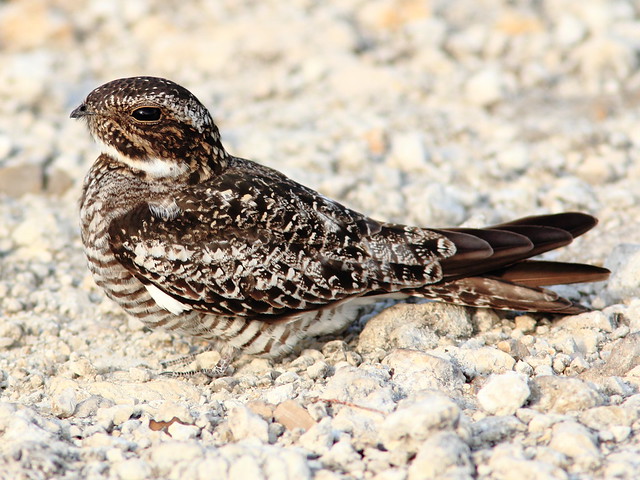 |
| Common Nighthawk. Photo by Kenneth Schneider (Flickr, CC) |
If you are interested in participating in these surveys please e-mail me. For those who would like to participate, I will explain the protocols and data collection, and hand out data sheets, sunset/moonrise/moonset times, and survey route maps on Tuesday June 3rd at 6 pm in the University of Wyoming Student Union, at the seating area across from the information booth on the main level. If you cannot make this training time but would like to participate, please e-mail to set up an alternate time to meet me.
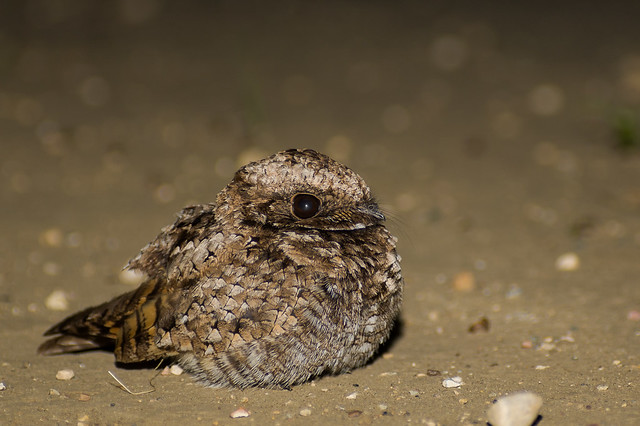 |
| Common Poorwill. Photo by Andy Teucher (Flickr, CC) |
Thanks to those who decide to participate and let’s hope the weather cooperates this year!
Sophie Osborn
P.S. For those who prefer hiking and doing daytime bird surveys, we will be conducting our annual Brown-capped Rosy-Finch survey on July 12, 2014 this year. More information about that survey to come soon...
Saturday, May 24, 2014
Laramie Hotspots Field Trip Report

excellent views of colorful neotropical migrants and spent some quality time learning to identify birds by their songs. Highlights were a male Rose-breasted Grosbeak at Greenhill Cemetery, a singing Veery at Optimist Park, and dark-morph Swainson's Hawks at Optimist Park and Greenhill Cemetery. We detected a total of 44 species; links to the eBird checklists for each hotspot and the complete trip list are below.
Optimist Park/Greenbelt
LaBonte Park
Greenhill Cemetery

Canada Goose
Double-crested Cormorant
Turkey Vulture
Swainson's Hawk
American Avocet
Spotted Sandpiper
Wilson's Phalarope
California Gull
Forster's Tern
Rock Pigeon
Eurasian Collared-Dove
Mourning Dove
Downy Woodpecker
Western Kingbird
American Crow
Common Raven
Northern Rough-winged Swallow
Tree Swallow
Barn Swallow
Cliff Swallow
Mountain Chickadee
Red-breasted Nuthatch
House Wren
Ruby-crowned Kinglet
Veery
Swainson's Thrush
American Robin
Gray Catbird
European Starling
Cedar Waxwing
Yellow Warbler
Yellow-rumped Warbler
Song Sparrow
Western Tanager
Rose-breated Grosbeak
Black-headed Grosbeak
Red-winged Blackbird
Common Grackle
Brown-headed Cowbird
Bullock's Oriole
House Finch
Pine Siskin
American Goldfinch
House Sparrow
Friday, May 23, 2014
Book talk by Jackie Canterbury
Join us next Wednesday, May 28th, for our last evening program of the spring season. Dr. Jackie Canterbury, co-author of Birds and Birding in Wyoming's Bighorn Mountains Region, will give a talk followed by a book signing. Her book was published last fall and contains the most up-to-date information on the distribution and breeding status of bird species found in the Bighorns. Birds and Birding also explains the Bighorns' ecology, geology, and birding locations.
The talk will be held at the Berry Center in conjunction with the University of Wyoming's Biodiversity Institute. The reception will begin at 6:30 pm and Dr. Canterbury's talk will begin at 7:00 pm. This event is open to the public.
Birds and Birding in Wyoming is available for purchase or free download here.

The talk will be held at the Berry Center in conjunction with the University of Wyoming's Biodiversity Institute. The reception will begin at 6:30 pm and Dr. Canterbury's talk will begin at 7:00 pm. This event is open to the public.
Birds and Birding in Wyoming is available for purchase or free download here.
Wednesday, May 21, 2014
LAS field trip to Hereford Ranch, Cheyenne, WY
 |
| Eastern Screech-Owl. Photo © Julie Hart |
Bird list:
Mallard
Great Blue Heron
Turkey Vulture
Broad-winged Hawk
 |
| Photo © Julie Hart |
Red-tailed Hawk
Spotted Sandpiper
Eurasian Collared-Dove
Mourning Dove
Eastern Screech-Owl
Belted Kingfisher
Red-headed Woodpecker
Downy Woodpecker
Northern Flicker
American Kestrel
Empidonax sp.
Say's Phoebe
Western Kingbird
Blue Jay
Black-billed Magpie
Northern Rough-winged Swallow
Barn Swallow
Cliff Swallow
Red-breasted Nuthatch
House Wren
Blue-gray Gnatcatcher
Ruby-crowned Kinglet
Townsend's Solitaire
Veery
Swainson's Thrush
American Robin
Gray Catbird
Brown Thrasher
European Starling
Northern Waterthrush
Common Yellowthroat
Yellow Warbler
Yellow-rumped Warbler
Wilson's Warbler
Yellow-breasted Chat
Green-tailed Towhee
Chipping Sparrow
Clay-colored Sparrow
Lark Sparrow
Lincoln's Sparrow
White-crowned Sparrow
Western Tanager
Lazuli Bunting
Red-winged Blackbird
Western Meadowlark
Yellow-headed Blackbird
Common Grackle
Brown-headed Cowbird
House Finch
American Goldfinch
House Sparrow
Subscribe to:
Posts (Atom)