Friday, December 20, 2013

Snowy Owl Irruption in Eastern North America

The eastern United States and Canada are in the midst of a massive Snowy Owl (Bubo scandiacus) invasion. Unlike the irruption a couple years ago, this event seems to be limited to the Atlantic Coast and Great Lakes region, with large numbers of owls showing up as far west as Minnesota, Illinois, and North Dakota. Snowy Owls are even showing up as far south as North and South Carolina, with one report even coming from Bermuda!  Despite the restricted range of this winter's irruption, incredible numbers of birds are showing up.  One particularly impressive report comes from Bruce Mactavish in Newfoundland, where over 300 Snowy Owls were found in a small area of coastline (you can read more about this here).

This Snowy Owl invasion has caught the attention of many people, with articles even appearing in the New York Times, which you can see here.  Another extremely informative and interesting article about the impressive Snowy Owl flight is on the eBird homepage.  In this article, you can see the extent of this year's Snowy Owl distribution compared with last winter, which was not an invasion year.  The maps are striking.

I was lucky enough to see some of the Snowy Owl excitement on a recent trip home to New York for the holidays.  The first bird we encountered in the early morning light was still actively hunting from atop a power pole right next to the road. We were able to watch the bird from a respectable distance without disturbing it while it actively searched the dunes for prey before eventually taking flight to roost for the day.


Snowy Owl (Bubo scandiacus) - Suffolk Co., NY

The second bird picture below was encountered roosting in the dunes along the beach.  This was one of two birds we saw at this site. Many of these coastal sites throughout the Northeast are currently harboring one or more Snowy Owls, where they haven been observed preying on mice, rats, rabbits, and even birds such as pigeons and ducks (Parmelee 1992).

Snowy Owl - Nassau Co., NY

Note: all photos in this post are © Shawn Billerman

References:

Parmelee, David F. 1992. Snowy Owl (Bubo scandiacus), The Birds of North America Online (A. Poole, Ed.). Ithaca: Cornell Lab of Ornithology; Retrieved from the Birds of North America Online: http://bna.birds.cornell.edu/bna/species/010

Sunday, December 15, 2013

Fall Migration: A Recap

Fall migration in the Laramie area was very busy this year. The fun kicked off as early as July, with the earliest migrants, shorebirds, started moving. The earliest shorebird migrants that show up in July are generally failed breeders. Shorebird migration peaks in mid to late August, but continues well into September and even October.

Baird's Sandpiper (Calidris bairdii) - Albany Co. 
Wilson's Phalarope (Phalaropus tricolor) - Albany Co.
Besides shorebirds, songbirds and other land birds made a good appearance as well.  Wilson's Warblers (Cardellina pusilla) were very this year, with smaller number of other warblers such as MacGillivray's (Geothlypis tolmiei), Orange-crowned (Oreothlypis celata), Townsend's (Setophaga townsendi), and Yellow Warblers (Setophaga petechia), and rarities including Pine Warbler (Setophaga pinus), Black-and-white Warbler (Mniotilta varia) and American Redstart (Setophaga ruticilla). Sparrow diversity was also impressive, with good numbers of White-crowned (Zonotrichia leucophrys), Lincoln's (Melospiza lincolnii), and Clay-colored Sparrows (Spizella pallida).  Hummingbirds, which start moving by late July, lingered into September, with especially good numbers of Rufous Hummingbirds (Selasphorus rufus), and smaller numbers of Broad-tailed (Selasphorus platycercus) and Calliope Hummingbirds (Selasphorus calliope).

Wilson's Warbler (Cardellina pusilla) - Albany Co.
Lincoln's Sparrow (Melospiza lincolnii) - Albany Co.
Clay-colored Sparrow (Spizella pallida)
Rufous Hummingbird (Selasphorus rufus) - Albany Co.
Laramie was also host to some more unusual birds this fall.  While not completely unexpected, two Lewis's Woodpeckers (Melanerpes lewis) were found at the Greenhill Cemetery, while Williamson's Sapsuckers (Sphyrapicus thyroideus) were found elsewhere in town.

Lewis's Woodpecker (Melanerpes lewis) - Albany Co.
In late October and November, gulls and waterbirds started pushing through in good numbers. Lake Hattie and Hutton Lakes National Wildlife Refuge were particularly productive, with huge concentrations of waterfowl that included both Surf and White-winged Scoters. Gull highlights included Wyoming's second record ever of Little Gull at Hutton Lake National Wildlife Refuge, several Sabine's Gulls, and a single Thayer's Gull at Lake Hattie.

Little Gull (Hydrocoloeus minutus) - Albany Co.
Pacific Loon (Gavia pacifica) - Albany Co.

Note: all photos in this post are © Shawn Billerman

The latest binocular review from CLO is out


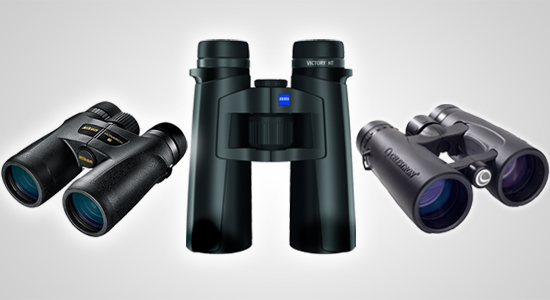
If you are looking for a holiday gift for a birder in your life or if you are considering a personal upgrade, the Cornell Lab of Ornithology's latest binocular review is out. This is a one-stop shop for comparing many models in difference price categories so you can hone in what you need. They've added a new price category and reviewed over 100 binoculars. Check out their top picks here.

Wednesday, December 4, 2013

Christmas Bird Count - December 14th

SEEKING VOLUNTEERS TO TAKE PART IN AUDUBON’S 114th
CHRISTMAS BIRD COUNT

The Laramie Audubon Society will again take part in a 100-year-old Christmas tradition, Audubon’s Christmas Bird Count, which mobilizes more than 70,000 volunteer bird counters in more than 2,300 locations. This wildlife survey effort provides important information about birds and their habitats to scientists and conservationists.

Volunteers are welcome to join in the count with the Laramie Audubon Society chapter as it conducts the Albany County Christmas Bird Count on Saturday, December 14 This will be the 36th count of the Albany County circle. Volunteers are needed to help count every bird present in a 15-mile diameter circle around Laramie on the day of the count. Novices are welcome and will be paired with more experienced bird watchers.

Volunteers can call ahead (307-286-1972) or meet at Coal Creek Coffee (110 E. Grand) at7:30 am on the day of the count to get data forms and team assignments. Some teams walk while others drive through portions of the count circle. Volunteers will reconvene at The Grounds Internet and Coffee Lounge (171 N. 3rd St.) at 12:00 pm to drop off morning reports and to regroup if continuing in the afternoon.

Volunteers should wear warm, layered clothing and boots, and bring water, snacks and binoculars if they have them. Bird feeder watchers are also welcome. Volunteers are invited to a chili supper where results will be compiled beginning at 4 pm at the home of Shay Howlin, event organizer. Potluck items welcome, but not required.  Please contact Shay Howlin if you would like to be assigned a route early, would like forms for feeder watching, or have any questions (307-286-1972wolfhowlin@gmail.com).

Gray-crowned Rosy-finch, Laramie Co., WY (2013)
Note: all photos in this post are © Shawn Billerman

Tuesday, November 19, 2013

Sage Spirit Program on Wednesday, November 20

Wednesday, November 20th. Sage Spirit Project Update by Dave Showalter. This program is sure to be a visual delight!

Dave Showalter is a conservation photographer who is in his fifth year of working on a book and multi-media project—the Sage Spirit Project—that features our imperiled sagebrush ecosystem. LAS has served as fiscal sponsor for the project, enabling funders to make tax-deductible donations.

Dave is not unique in his belief that the "sagebrush is the beating heart of the Intermountain West" but he does have a remarkable ability to capture its beauty and highlight the diversity of species that call this habitat home. He also has photographed the industrial development that threatens this region and has worked with conservation groups to draw attention to these threats and foster protection for this ecosystem.

Come and see spectacular photographs and support this important work to highlight and protect the sagebrush ecosystem.

UW Berry Biodiversity Center, 10th & Lewis Street intersection. Bird chat and refreshments at 6:30 pm in the lobby. Program begins at 7 pm in the auditorium.

Friday, November 8, 2013

Fall Raptor Trip--Sat, Nov 9th

Saturday, Nov. 9th, 8:30am.  Fall Raptor Field Trip led by our local raptor expert Chad Olson.  We will search high and low for Golden and Bald Eagles, Ferruginous Hawks, Rough-legged Hawks,  Red-tailed Hawks, owls, American Kestrels, Merlins, and whatever else is out there.  We are always successful on this fall trip.  If you want to know about the various stages of coloration, age, and other characteristics of raptors, this trip is for you!  Very little walking is involved in this trip, but when we step out into the cold wind to spot the birds overhead or on the ground, you'll want to be dressed very warmly.

Laramie Audubon field trips are free and open to birders of all levels.  We will meet at Night Heron Books and Coffee, 107 E. Ivinson, downtown Laramie, to caffeinate and carpool.  Please dress for the worst weather and bring your birding paraphenalia, water and snacks.  This particular trip involves a lot of driving in search of raptors in our plains near Laramie, so gas up ahead of time.

Alternate date, in case of inclement weather (rain or blizzard counts as inclement), is Nov. 16th.  Call 307-760-8546 if you have questions.

Monday, November 4, 2013

Fuzz to Feathers to Flight: Geology Museum Exhibit Unveiling

Late notice, but thought this would be of interest to many Laramie Audubon members. Tonight at the UW Geology Museum, a new exhibit, entitled "Fuzz to Feathers to Flight: how birds arose from dinosaurs and took to the air" will be unveiled tonight, with a presentation by Katrina van Grouw (author of The Unfeathered Bird). Event starts at 6, and goes until 8.

Tuesday, October 29, 2013

October Public Talk: Reproduction in Hybrid Gulls

Reproductive success of gulls in a hybrid zone
Libby Megna, PhD student at UWYO

Glaucous-winged Gulls (Larus glaucescens) and Western Gulls (L. occidentalis) hybridize extensively where their ranges overlap along the coasts of Washington and Oregon, producing a continuum of phenotypic intergrades between the two parental species. This zone typically is considered an example of geographically bounded hybrid superiority, but studies have not consistently supported this model. I'll talk about mating patterns and hatching success of these gulls, and how such data help us to understand how this hybrid zone works.

When: Wednesday, Oct. 30
6:30pm Bird Chat and refreshments in the lobby
7:00pm Presentation in the auditorium

Where: UW Berry Biodiversity Center, 10th St. & Lewis St. (free parking after 5pm)

Friday, October 11, 2013

Field Trip Oct 12th to Plains Lakes

We will be heading out tomorrow morning to the Plains Lakes. Hutton Lakes NWR is closed due to the government shutdown. Meet at Night Heron Books at 8am. We will carpool and be back in Laramie at about noon. If you can't join us for the entire morning, please drive separately. Dress for the weather and bring plenty of water and snacks. All ages and abilities welcome.

Tuesday, October 8, 2013

Swifts in Migration

I just came across this blog post today by Ed Young about swifts staying on the wing for 200 days straight. Remarkable.


Friday, October 4, 2013

Oct 5 Field Trip Canceled

Due to inclement weather, the field trip for Saturday, Oct 5th, to Hutton Lakes has been canceled. We will reschedule for next Saturday, weather permitting.

Tuesday, September 24, 2013

Public Seminar Tomorrow Night - Sept 25


LAS and the UWYO Zoology & Physiology Department are hosting a guest lecture by Dr. Harry Greene from Cornell University. His talk is titled "Natural History, Aesthetics, and Conservation" and will begin at 7:30 pm in the Berry Center Auditorium. Refreshments and BirdChat will begin at 7 pm in the lobby. Afterwards, Dr. Greene will be holding a book signing for his book Tracks and Shadows.

Please join us tomorrow evening, Sept 25th at 7:30 pm, for an engaging natural history talk!

Field Trip Report - Sept 21

This morning, the Laramie Audubon Society field trip checked a couple of songbird migrant sites in and around Laramie. We had pretty good success, and although it is getting late for many birds, there were still good numbers of migrants around. Along the Greenbelt, we had two MacGillivray's Warblers, a late Western Wood-Pewee, and some other good migrants.

Our eBird list from the Greenbelt is here: http://ebird.org/ebird/view/checklist?subID=S15220827

We ended with a walk through Greenhill Cemetery, where the highlight was a *Cassin's Vireo*. It was seen feeding in the pines along the south edge of the cemetery. A late *Olive-sided Flycatcher* was also actively feeding from the tops of the Black Poplars. We also had a female *Williamson's Sapsucker*, many Yellow-rumped Warblers, and two each of Orange-crowned and Townsend's Warblers.

Our complete eBird list from Greenhill Cemetery is here: http://ebird.org/ebird/view/checklist?subID=S15221619

Good birding,
Shawn Billerman

Cassin's Vireo by Shawn Billerman

Thursday, September 19, 2013

Field Trip to in-town hotspots -- Sat Sept 21

This weekend we will take a field trip to some birding hotspots within Laramie City limits. We will meet at Night Heron books 8 am to fuel ourselves and carpool. We will start with a short walk at Optimist Park and the Laramie Greenbelt, head over to see what is hanging out at LaBonte Park, and finish at the cemetery. The community garden and trees at the cemetery have hosted some great birds in the past week, including lots of Wilson's Warblers and White-crowned Sparrows with rarer sightings of Tennessee Warbler and Lewis's Woodpecker.

All ages and abilities are welcome. Please dress appropriately for the weather.

Wilson's Warbler by Shawn Billerman

Sunday, September 15, 2013

LAS Field Trip - Laramie Plains Lakes - Sabine's Gulls ++

Frank, Chad, and Kristina birding at Twin Buttes by Julie Hart
Today (September 14), 10 people joined the Laramie Audubon Field Trip to the Laramie Plains Lakes in Albany County.  We had fantastic weather, and many great birds.  Ducks appear to be accumulating on all of the major lakes, with good numbers of both dabblers and divers.  Songbirds continue to make a strong showing, and we had many Wilson's Warblers, along with smaller numbers of Orange-crowned and Yellow-rumped Warblers in the few scattered trees.  Four *Great-tailed Grackles* continue near Blake's Pond. There are also good numbers of raptors continuing, with Ferruginous,
Swainson's, and Red-tailed Hawks, Prairie Falcon, and both Bald and Golden
Eagles.  Small numbers of shorebirds continue, with Baird's and Semipalmated
Sandpipers, both yellowlegs, and Long-billed Dowitchers.

The true highlights of the day came at Lake Hattie, where we found 5 *Sabine's
Gulls* far out over the lake, best viewed from near the dam.  There was a
single adult, but the rest were juvenile.  The incredible wing pattern was
clearly visible when they would fly.

After the official LAS trip ended, four of us returned to Lake Hattie to
try and get better views of the Sabine's Gulls, and to try to document them
better.  We were not disappointed, and we were able to re-find 3 of the
juvenile birds.  One flew by fairly close to where we were standing.  In
addition to the gulls, we also found an adult *Parasitic Jaeger* that
mostly kept to itself, but gave chase to some Black Terns briefly.  There
was also an adult *Lesser Black-backed Gull* with the California and
Ring-billed Gulls.

Good birding!
Shawn Billerman
Laramie
American White Pelicans on Lake Hattie by Julie Hart

Friday, September 13, 2013

Field Trip to the Plains Lakes - Sat Sept 14th

The recent weather system has brought in lots of migrants to the area and we will be heading out tomorrow, rain or shine, to see what is around on the Plains Lakes. We will likely spend a lot of time looking at waterfowl, but there are bound to be small migrating passerines fueling up for a long migration. People of all ages and birding levels are encouraged to participate, but please dress appropriately.

Meet at 8 am at Night Heron Books, downtown. We will carpool from there.

Canada and Greater White-fronted Geese by Shawn Billerman

Friday, September 6, 2013

Meet the Sagebrush Sparrow

In Wyoming, many birders have become familiar with the Sage Sparrow, which is a common sagebrush obligate species that breeds across much of the state.  However, the Sage Sparrow as we know it no longer exists.  In July 2013, the American Ornithologists' Union (AOU) published their annual supplement to the Check-list of North American Birds.  In this update, the AOU decided, based on extensive research, to split the Sage Sparrow into two species (Chesser et al. 2013).  The first, the Bell's Sparrow (Artemisiospiza belli), is found in chaparral dominated habitat in western California south to central Baja California.  It reaches east-central California, where it has limited contact with the second species (Cicero and Johnson 2007, Cicero and Koo 2012).  The second species, which is widely distributed through the Great Basin in sagebrush steppe, and is especially common through much of Wyoming, is the Sagebrush Sparrow (Artemisiospiza nevadensis).

Sagebrush Sparrow (Artemisiospiza nevadensis) - Albany Co.
The decision to split the Sage Sparrow into two species was based on genetic evidence, ecological data, and morphological differences between Bell's and Sagebrush Sparrow.  These two species come into contact in a narrow region of east-central California.  Where they meet, there is limited interbreeding, meaning each species prefers members of its own species, resulting in few hybrids and little gene flow (Cicero and Johnson 2007, Cicero and Koo 2012).  Further, there are strong niche differences between the two sparrows, with Sagebrush Sparrow preferring the cooler, wetter Great Basin desert sagebrush, and Bell's Sparrows favoring hotter, drier regions with less variability in temperature through the year (Cicero and Johnson 2007, Cicero and Koo 2012).

While this decision has relatively little impact on us here in Wyoming, it does add a new species of bird to the already diverse class, Aves.  It also means that the next time you're in California and see a Sage Sparrow, it is now recognized as a distinct, new species, the Bell's Sparrow.  This new research also adds to our understanding of how species boundaries are formed, and what factors may be important in the constant evolution of species.

Note: all photos in this post are © Shawn Billerman

References:

Chesser, RT, RC Banks, FK Barker, C Cicero, JL Dunn, AW Kratter, IJ Lovette, PC Rasmussen, JV Remsen, Jr., JD Rising, DF Stotz, and K Winker. 2013. Fifty-fourth supplement to the American Ornithologists' Union Check-list of North American Birds. The Auk 130(3): 1-14

Cicero, C and NK Johnson. 2007. Narrow contact of desert sage sparrows (Amphispiza belli nevadensis and A.b. canescens) in Owens Valley, eastern California: evidence from mitochondrial DNA, morphology, and GIS-based niche models. Ornithological Monographs 27: 78-95

Cicero, C and MS Koo. 2012. The role of niche divergence and phenotypic adaptation in promoting lineage diversification in the Sage Sparrow (Artemisiospiza belli, Aves: Emberizidae). Biological Journal of the Linnean Society 107: 332-354

Wednesday, September 4, 2013

eBird talk tonight!

Please join us for a special talk tonight about eBird!

WHERE:  UWYO Berry Center auditorium, corner of 10th and Lewis St
WHEN: Refreshments and birdchat begin at 6:30 pm, talk starts at 7:00 pm
WHAT: Brian Sullivan, program leader for eBird, will present a stimulating talk about how you can get involved with eBird, an international repository for bird sightings. Learn how eBird can help you keep track of your life list, find new places to birdwatch, and contribute to scientific endeavors!

American White Pelican by Shawn Billerman

Friday, August 23, 2013

Bird research in the news

I came across two articles highlighting bird research this week. The first is related to the public talk we are co-hosting Sept 4th on eBird, and the second is on shearwater movements being tracked during their non-breeding season.

--------------------

CROWDSOURCING, FOR THE BIRDS
published in The New York Times August 19, 2013
Photo from Cornell Lab of Ornithology
Helena, Mont. — On a warm morning not long ago on the shore of a small prairie lake outside this state capital, Bob Martinka trained his spotting scope on a towering cottonwood tree heavy with blue heron nests. He counted a dozen of the tall, graceful birds and got out his smartphone, not to make a call but to type the number of birds and the species into an app that sent the information to researchers in New York.

Mr. Martinka, a retired state wildlife biologist and an avid bird-watcher, is part of the global ornithological network eBird. Several times a week he heads into the mountains to scan lakes, grasslands, even the local dump, and then reports his sightings to the Cornell Lab of Ornithology, a nonprofit organization based at Cornell University. 

Read the rest of this article here.

--------------------

SEABIRDS FITTED WITH SATELLITE TAGES TO TRACK MOVEMENTS IN THE GULF OF MAINE
published on Constantine Alexander's blog and LinkedIn August 18, 2013

Photo copyright NOAA
Researchers at NOAA's Stellwagen Bank National Marine Sanctuary are using satellite technology to learn more about the movement, life cycle, feeding and foraging habits of Great Shearwater seabirds in the Gulf of Maine ecosystem. Scientists have attached satellite transmitters to 10 birds and are tracking their movements this summer.

Shearwaters are one of more than 30 species of seabirds that can be found in the sanctuary. The birds winter and nest in the southern hemisphere, usually appearing in the Gulf of Maine in April to feed. However, little is known about how they spend their time in the Gulf of Maine.

Read the rest of the blog entry here. You can read about the research directly and track individual birds at the NOAA's Stellwagen Bank National Marine Sanctuary page.

Tuesday, August 13, 2013

Webinar Series on Shorebird Identification

Willet by Shawn Billerman
The Cornell Lab of Ornithology is offering a series of webinars this fall to help people learn shorebird and waterfowl identification. This is a great opportunity for those wanting to advance in this difficult area. Kevin McGowan is a great teacher and helped me become the birder I am today. The series starts this Friday and each webinar is only $10. Space is limited.

For more information, click here.

Monday, August 12, 2013

Threatened IBA in the Dominican Republic

For those that were present for my LAS presentation on Bicknell's Thrush a few years ago (2009 I think?), you may remember that I conducted research on this thrush in the Dominican Republic. The place where I conducted this research is an Important Bird Area is now under severe threat. Please read below for more information.
Sunset in the Sierra de Bahoruco by Julie Hart
Excerpt from the Birding Community E-bulletin by Paul Baicich and Wayne Peterson.

IBA NEWS: PRESSURES IN THE DR

In December we ran a quick review of a new bird finding guide for the Dominican Republic, RUTA BARRANCOLI, by Steven C. Latta and Kate J. Wallace (2012, National Aviary).

Now there is news from the Dominican Republic that the Sierra de Bahoruco, an Important Bird Area (IBA) in that country is currently under increasing threat.

The area has long been suffering due to burning for charcoal production and illegal agricultural practices, and in mid-July a dry forest area on its northern foothills an area formally protected as Loma Charco Azul Biological Reserve, is starting to be cleared to make way for an agricultural settlement. This is occurring despite the fact that the area is supposed to be protected as a Biological Reserve.

The Dominican Agrarian Institute has approved this activity, and about 260 acres are slated for immediate destruction. Multiple species are at risk. The Loma Charco Azul Biological Reserve, which falls under the larger Jaragua-Bahoruco-Enriquillo Biosphere Reserve which has been ratified by UNESCO, is habitat for the endangered Bay-breasted Cuckoo (Coccyzus rufigularis), an endemic species with a very limited distribution in Hispaniola.

You can get more details on this threat and actions being taken here.


Monday, August 5, 2013

State of the Birds 2013

The 2013 report on the state of the birds focuses on birds on private lands. Approximately 60% of land in the U.S. is privately owned. Highlights of the report include:


  • Through the Farm Bill’s Working Lands for Wildlife Program, more than 700 ranchers are enhancing 2.5 million acres of aridland habitat for the benefit of sage‐grouse.
  • Regional spring counts of Henslow’s Sparrows are now about 25 times higher than 30 years ago, prior to the Farm Bill’s Conservation Reserve Program.
  • Through Mountain Plover Nest Conservation Programs in Nebraska and Colorado nearly 250 private landowners have protected more than 1,000 nests of the imperiled Mountain Plover.
Download the State of the Birds 2013.

Wednesday, July 31, 2013

Restless Nights for Relocated Birds

When managers try to move a species to a new environment, many of the animals often die soon after being released. Now scientists have found one possible reason for the high failure rate. According to a study in Biology Letters, birds don’t get enough sleep when they’re in an unfamiliar place.

Read the rest of the commentary from Conservation Magazine here.

Sunday, July 21, 2013

Breeding Birds of the Laramie Plains

By mid-July here in Laramie, breeding season is well under way, and for some species, already over.  While early summer can be a slow birding time in many parts of the country, things are still quite interesting and exciting here in Albany County.

Out on the plains around Laramie, many songbirds are busy feeding nestlings and fledglings.  I recently took a trip up to the Old Laramie River Road, which runs through a variety of grassland types, from the typical dry shortgrass prairie to wetter, longer grass habitats closer to the Laramie River.  This variety of grassland habitats means that this area has some of the best diversity of grassland species in Albany County, including both longspurs, Lark Buntings, and Vesper Sparrows, among many others.

Many species, including Horned Larks (Eremophila alpestris), and McCown's Longspurs (Rhyncophanes mccownii) have fledged young, and already seem to be flocking in preparation for their southward migration toward the end of August.

McCown's Longspur (Rhynchophanes mccownii) fledgling - Albany Co.
In addition to McCown's Longspurs, Old Laramie River Road is probably the best spot in Albany County to see Chestnut-collared Longspur (Calcarius ornatus).  In wetter, longer grass, this species is quite easy to find as they sing from any elevated perch.  Like McCowns, Chestnut-collared Longspurs also skylark, singing in flight, although their skylarking display is not as impressive as that of McCown's Longspur.

Chestnut-collared Longspur (Calcarius ornatus) - Albany Co.
Chestnut-collared Longspur fledgling - Albany Co.
Lark Bunting (Calamospiza melanocorys) - Albany Co.
In addition to the great songbird activity, Old Laramie River Road has also had an exciting diversity of raptors, with many fledgling Swainson's Hawks foraging across the plains.  There have also been Red-tailed and Ferruginous Hawks, American Kestrels, and Prairie Falcons.

Ferruginous Hawk (Buteo regalis) juvenile - Albany Co.
Despite the heat of the summer, there is still quite a bit of bird activity out there, so get out there and see what you can find.  This is a really interesting time of year, and you never know what might show up.

Note: all photos in this post are © Shawn Billerman